
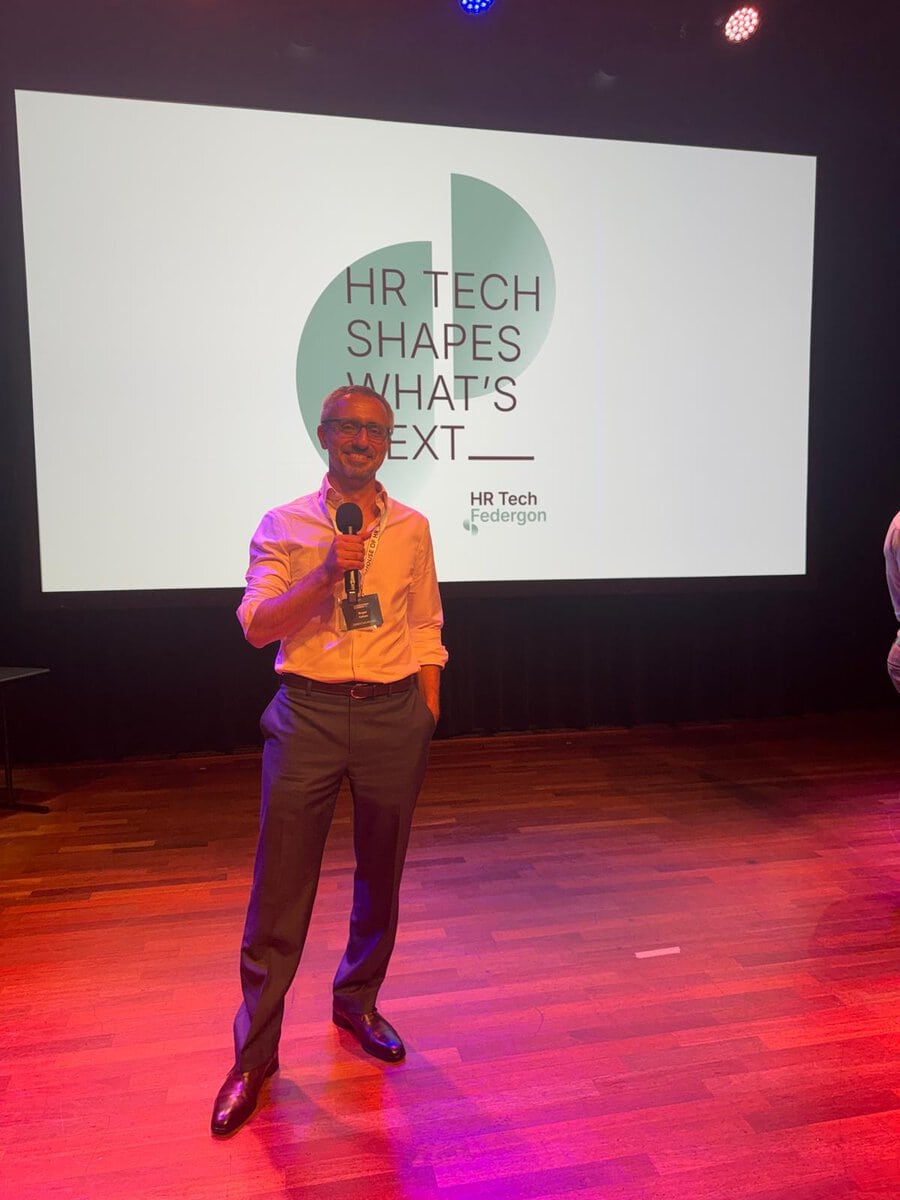
At the E-Recruitment Congress in Amsterdam on 6 October, OrientaEuro founder Roger Cohen introduced the audience to Sarah. A fictional employee facing a very real situation: returning to work after a long period of sick leave, with neither she nor her employer fully prepared.
Her story brought a human question into a technology congress: what support does someone in Sarah’s position actually need, and how can AI contribute?
Preparing the person and the possibilities
After years with her company, a back injury has kept Sarah away from work. Now she learns that her sick leave will not be extended.
“I’m coming back next month.”
But a return date does not resolve everything. Her work may have changed. Her confidence may have suffered. What she can do today, what support she needs and which role would suit her all need to be explored.
Sarah needs people who listen, understand her concerns and help her prepare concrete next steps. She also needs a space where she can speak openly about her options.
This is the principle behind OrientaEuro’s Return to Work programme for employers supporting employees on long-term sick leave. Each participant is accompanied by a health adviser and a career coach, professional, neutral and independent of the employer.
Together, they help the person explore three possible roads:
Their previous job, with appropriate adaptations.
Another role with the same employer.
A new start elsewhere.
The work goes beyond identifying a preferred option. It includes preparing proposals for job adaptations, conversations with HR, an internal application or the steps towards a different employer.
All three roads can benefit both sides. The option that benefits no one is inaction.
Where AI belongs
Technology has a practical role in this process. OrientaEuro’s coaches use Aicca, its AI platform for career guidance, to turn what a person shares into material they can explore and refine together.
For someone like Sarah, this can include a map of return-to-work options, proposals for job adaptations and preparation for a conversation with HR.
The coach reviews and refines the outputs with the participant. Professional judgement, the human relationship and the person’s own choices remain central.
The same approach extends beyond return to work. In reintegration, outplacement, recruitment and career coaching, Aicca helps professionals prepare people for their next step through career exploration, skills gap analysis, tailored applications and interview preparation.
Two ways to put this approach into practice
Employers looking for external support for employees on long-term sick leave can turn to OrientaEuro’s Return to Work programme.
Organisations with their own coaching teams can use Aicca within their existing services, with training and support to help professionals integrate it into their everyday practice.
Both follow the same principle: people need people. Technology should help those people do their work better.